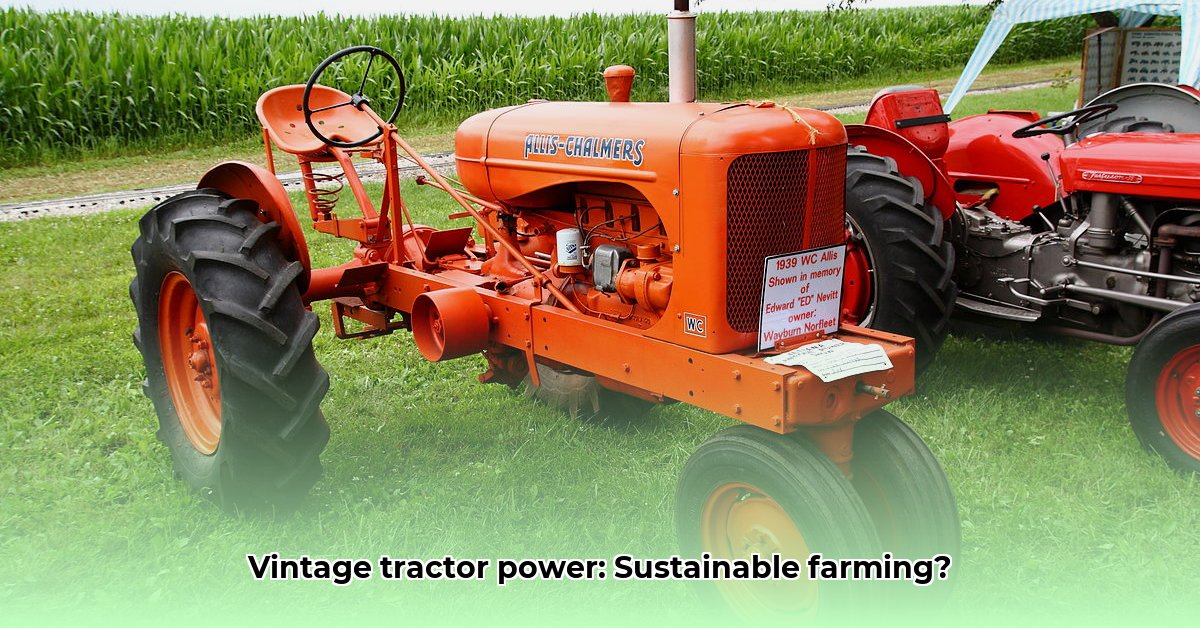
A Legacy of Durability: Allis-Chalmers Tractors and Modern Sustainable Agriculture
The rhythmic chug of a vintage Allis-Chalmers tractor—a sound that evokes images of hardworking farmers and simpler times—is more than just nostalgia. These sturdy machines, built to last, are prompting a renewed conversation about their role in modern sustainable agriculture. This article explores the nuanced advantages and disadvantages of using Allis-Chalmers tractors today, examining their historical context, comparing them to modern alternatives, and offering actionable recommendations for farmers, dealers, policymakers, and researchers. For more on Allis-Chalmers pulling tractors, see this resource.
A Blast from the Past: Allis-Chalmers and the Evolution of Farming
Allis-Chalmers tractors hold a significant place in agricultural history, representing a pivotal era in mechanization. Their robust design and relative simplicity made them popular across various farm sizes. Built to endure, these machines embody a time when products were manufactured for longevity, not disposability. This durability is a crucial factor in today's sustainability debate. Understanding their legacy helps us assess their potential contribution to modern farming practices.
The Allure of Vintage: Allis-Chalmers Tractors and Sustainable Principles
The appeal of using Allis-Chalmers tractors in contemporary farming lies in their inherent sustainability. Their renowned durability translates into a significantly reduced environmental impact compared to the constant cycle of manufacturing, using, and discarding modern equipment. The lower initial purchase price makes them a financially accessible option for smaller farms and beginning farmers. Furthermore, their simpler design often results in easier and cheaper repairs, limiting unnecessary trips to dealerships and lowering maintenance costs. This resourcefulness aligns perfectly with the core principles of sustainable agriculture, emphasizing reduced waste and making the most of available resources.
The Challenges: Acknowledging the Limitations of Vintage Technology
While Allis-Chalmers tractors present undeniable advantages, it's crucial to acknowledge their drawbacks. Fuel efficiency is often markedly lower than in modern tractors, leading to higher operating costs and a greater carbon footprint over the tractor's lifespan. Sourcing replacement parts can be a significant challenge, leading to delays and increased repair expenses. The absence of modern features like GPS and precision agriculture technology limits operational efficiency. Finally, older engines generally lack the emission controls of newer models, resulting in potentially higher greenhouse gas emissions.
A Comparative Analysis: Weighing the Costs and Environmental Impacts
The following table offers a simplified comparison of Allis-Chalmers tractors with modern sustainable tractor alternatives. It is imperative to note that precise figures vary considerably depending on factors including specific models, farming practices, and geographic location.
| Feature | Small Allis Chalmers Tractor | Modern Sustainable Tractor |
|---|---|---|
| Initial Purchase Price | Significantly Lower | Significantly Higher |
| Fuel Consumption | Higher | Lower |
| Maintenance Costs | Potentially Lower (parts availability is key) | Potentially Higher |
| Emissions | Higher | Lower |
| Technology | Very Limited | Advanced (GPS, precision farming technology) |
| Overall Lifecycle Cost | Requires further investigation | Requires further investigation |
Isn't it interesting to consider the potential longevity of an Allis-Chalmers compared to the lifespan of a modern tractor? A thorough lifecycle cost analysis, encompassing fuel, maintenance, parts, and eventual disposal, is crucial for a truly informed decision.
Actionable Recommendations for a Sustainable Future
Sustainable agricultural practices necessitate a collaborative approach involving diverse stakeholders. The following steps offer a path towards responsible integration of vintage tractors within modern farming:
For Farmers: Conduct a comprehensive cost-benefit analysis considering all aspects of ownership (fuel, maintenance, parts, downtime). Explore potential government subsidies or grants for upgrading to more fuel-efficient equipment if financially viable. Prioritize preventative maintenance to extend lifespan.
For Dealers and Mechanics: Invest in strategies to improve parts availability, potentially exploring 3D-printing or collaborations with specialized repair shops. Offer training on sustainable repair and maintenance techniques.
For Policymakers: Implement policies that encourage sustainable equipment adoption while acknowledging the challenges faced by smaller farms. Fund research into the repair and maintenance of older tractors and their potential for adaptation to modern technology.
For Researchers: Conduct thorough lifecycle analyses to compare the environmental impact of vintage and modern tractors. Investigate the possibility of retrofitting older models with fuel-efficient engines or emission control systems. What are the limits of retrofitting, and what impact does that have on the overall sustainability of this practice?
Conclusion: A Nuanced Approach to Sustainable Farming
The role of Allis-Chalmers tractors in sustainable agriculture is complex and multifaceted. While their lower initial cost and inherent durability offer significant benefits, their lower fuel efficiency and lack of modern technology present limitations. A balanced approach, considering all aspects of cost and environmental impact, is crucial. Through collaboration and strategic investment, we can harness the best of both vintage and modern technology to create a more sustainable future for agriculture. The ongoing conversation emphasizes the need for continuous research and innovation in promoting environmentally responsible farming practices.